Sunday, December 19, 2010

Little Women by Louisa May Alcott

I've found the perfect book for you to start right now.  You've probably already read it (if your a female and belong to my generation or older) or at least heard of it, but isn't it nice sometimes to be reminded of great books?


And this truly is a great one--a healing book, as Oliver Van DeMille would say--one that is not only entertaining, but also beautiful and full of little pearls of wisdom--it makes you want to be better.

Little Women is a true American classic.  Set in Civil War New England, it narrates several years in the lives of the March sisters--Meg, Jo, Beth and Amy.  It begins right at Christmas time, which makes it an ideal book to start right now, then to keep reading throughout the new year.  It's very inspiring.  I used to want to be like Meg--beautiful, sweet and motherly, and while I enjoy reading about her experiences as a new wife and mother, Marmee is my real hero.  Now that I have my own kids, I treasure her wisdom and want to emulate the love (and PATIENCE!) she shows her own children.  Take this little tidbit, for example:

"'[Your father] showed me that I must try to practice all the virtues I would have my little girls possess, for I was their example. . . . the love, respect and confidence of my children was the sweetest reward I could receive for my efforts to be the woman I would have them copy.'"

I love this parenting advice:
"Mrs. March knew that experience was an excellent teacher, and when it was possible she left her children to learn alone the lessons which she would gladly have made easier, if they had not objected to taking advice . . ."

And talking with Jo:
"'If I don't seem to need help, it is because I have a better friend, even than Father, to comfort and sustain me.  My child, the troubles and temptations of your life are beginning and may be many, but you can overcome and outlive them all if you learn to feel the strength and tenderness of your Heavenly Father as you do your earthly one.'"

You just don't hear things like that in books anymore--they would be considered too moralistic, too religious. But how beautiful and true they are!  And if there is anything virtuous, lovely, or praiseworthy, shouldn't we seek after these things?  I think all daughters should be encouraged to read this book--all mothers too.  Why not at the same time?  Talk about what you read and the chocies the sisters make.  It may be old-fashioned, but the principles are every bit as important now!

Saturday, December 18, 2010

Peter and the Starcatchers by Dave Barry & Ridley Pearson


  This is supposed to be a retold story of Peter Pan, but it has a lot more adventure and way more details. It tells what happened before Peter Pan became the Peter Pan he is now. It was so fun to read I just couldn't put it down. I loved it!


Wednesday, December 8, 2010

A Christmas Carol by Charles Dickens

     I was excited to learn that our prophet, President Thomas S. Monson, and I have similar taste in books!  He addressed members of the Church of Jesus Christ of Latter-Day Saints last Sunday:
     "My Christmas reading each year helps bring to me the spirit of the season.  I always . . . read the timeless Dickens' classic; A Christmas Carol.  Who could fail to be inspired and taught by the changes which came to Ebeneezer Scrooge as he's instructed by the Ghosts of Christmas Past, Christmas Present, and Christmas Future?"  I know of no better way to kick off the Christmas season than with a reading of this beautiful story.  And I know you've probably seen all the movie versions a million times, but there is something so inspiring, so refreshing about this story that I strongly urge you to give the book a try.
     "Marley was dead, to begin with. . . . as dead as a doornail."  Beginning with a pun on doornails and coffin nails, Dickens perfectly mixes the spiritual with the macabre.  I read this every year to begin my holidays, and it never fails to bring a tear to my eye and make me resolve to be a little better.  I truly believe Dickens was inspired when he wrote it.
     The copy of A Christmas Carol I read this year had a fascinating introduction by a guy named Elliot Engel.  Do you have just a second?  You might find this interesting--we owe so much to Dickens' representation of Christmas:
     " . . . Dickens links snow and Christmas together for the first time in popular literature . . . before Dickens's story, the snow was merely mentioned by an author, never utilized to create that uniquely warm atmosphere which has become practically synonymous with our Christmas celebration today . . ."  
     What makes his description of a crisp, bright, snowy Christmas morning more surprising is that according to meteorologic records for England in the 1800's, "it snowed on Christmas Eve or Christmas Day in England on the average of only one time every thirty-two years."  However, Dickens' own childhood was unusual in that it was peppered with snowy white Christmases, due to a volcanic eruption in Indonesia (reminiscent of the Icelandic volcano eruption this year!) that changed weather patterns for a few years; he actually enjoyed a white Christmas at the impressionable ages of four, six, seven, and nine.
     I'm reading it to my little kids this year, and since they've watched the Muppet Christmas Carol and Mickey's Christmas Carol about fifty times already, they're quite interested (as long as I only read the "fun parts" and sing "There Goes Mr. Humbug" with them . . .).  It has given birth to some good discussions.

     So to quote Scrooge's nephew, Fred:
"There are many things from which I might have derived good, by which I have not profited, I dare say . . . Christmas among the rest.  But I am sure I have always thought of Christmas time, when it has come round -- apart from the veneration due to its sacred name and origin, if anything belonging to it can be apart from that -- as a good time: a kind, forgiving, charitable, pleasant time: the only time I know of, in the long calendar of the year, when men and women seem by one consent to open their shut-up hearts freely, and to think of people below them as if they really were fellow-passengers to the grave, and not another race of creatures bound on other journeys.  And therefore, uncle, though it has never put a scrap of gold or silver in my pocket, I believe that it has done me good, and will do me good; and I say, God bless it!"

Wednesday, December 1, 2010

Children of the Promise Series by Dean Hughes

These books were given to me by a neighbor several years ago, and I promptly tucked them away on a shelf.  I liked their pretty covers, but I wasn't in the mood for LDS fiction (honestly, I'm never in the mood for LDS fiction).  But having nothing to read a while back, I thought I'd give them a sporting chance.  So, dust covers removed, I began to "plow" my way through the series . . . or so I thought.  Instead, I found myself completely drawn in by Hughes' writing style, the stories, and the characters themselves.

He really did his research--I have to applaud that.  Although the main characters are fictional, almost everything that happens in the series is based on fact.  It follows the Thomas family, an LDS family living in Salt Lake City preceding, during, and following World War II.  With realistic dialogue, likeable characters, and a thrilling, fast-paced storyline, I didn't want to put the books down.  Any of them.  I think what I liked the most was learning about a piece of my family's history--both of my grandpa's served in WWII, and seeing what things were like for both them and their family and girls back home really struck a chord with me.  Very much worth reading, especially at this time of year--it begins around Christmas-time and describes the varied Christmases the family experiences as they spread all over the world.

Wednesday, October 13, 2010

The Girl Who Could Fly by Victoria Forester

This was an employee pick at Barnes & Noble (my favorite date night destination!) a few months ago, and it caught my eye.  When I found it sitting on the "New Arrivals" shelf at the library (it's not that new, but I'm not complaining), I snatched it up, eager to squeeze it in between two other books I was reading.

For the first half the book I read with quite a critical eye.  The cover of the book has a comment from Twilight's Stephanie Meyers: "It's the oddest/sweetest mix of Little House on the Prairie and X-Men . . ." This totally threw me--there was little or no Little House on the Prairie involved.  But then halfway through the book it started to really grab me.  What a sweet story!  It was exciting, interesting, clean (okay, it had one bad word), and it even had a good moral.  Perhaps what I liked most about it was its potential for discussion between parents and their kids who read it--about how the story symbolizes the choices we make and the tools used by the adversary (especially distraction!).

So while Piper McCloud, the main character, has a bit of a forced accent and seems a bit Pollyanna-ish--hey, what's wrong with that, right? :)

Wednesday, October 6, 2010

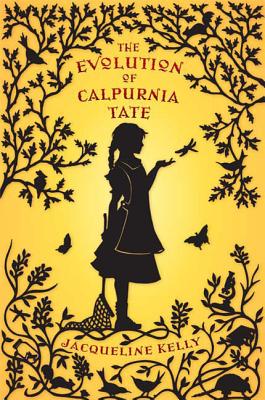
The Evolution of Calpurnia Tate by Jacqueline Kelly

I loved the title of this book and the cover, but when I read the summary I wasn't too excited.  However, lest I scare you away, let me preface my summary by telling you that I ended up really liked it.  A quick read--it moved along pretty swiftly.

Callie Vee is a preteen girl growing up in 1899 Texas.  The story takes place in the summer and fall of the year, just before the turn of the century.  Callie, surrounded by rowdy brothers and expected to learn to knit and sew and become a debutante (yes, I had to look it up--I totally thought it meant something else . . .), discovers in her grandfather both a friend and mentor.  Together they study the species of flora and fauna near their home while he instructs her in everything from Darwin to Copernicus, Chopin to Vivaldi.  The title sums up the story beautifully--while Callie is studying evolution, she herself evolves and makes many self-discoveries.

This book was clean--maybe a light cuss word or two?  I can't remember, but I truly enjoyed it (the book, not the cussing).  There were a few coming-of-age things that younger kids wouldn't get--not bad or anything, just scientific things about animals mating, etc.  I would say twelve and up would be old enough to read it.  Kelly has a very entertaining writing style, speaking from Callie's point of view; modern enough that you can empathize with her, yet with enough old-fashioned qualities to set it apart from a lot of the junk being written nowadays.

Thursday, September 30, 2010

Gilead by Marilynne Robinson

We are reading this book for our book club, and I admit I wasn't very excited about it.  The name sounded quite forbidding and sermonizing somehow, and as I thumbed through the pages, I saw little or no dialogue.  But since it is a Pulitzer Prize winner, I thought I'd better give it a sporting chance.


And I am so glad I did!  Both reflective and inspiring, but with a good story line (yes, it does have a story, even without the dialogue!) it wasn't preachy like I suspected.  Ironically enough, it is the fictional autobiography of a preacher in Gilead, Iowa, nearing the end of his life.  As he writes to the son who will not remember him, he discovers that even in old age there is much to learn.  It is so beautifully written!  Marilynne Robinson's writing style kept reminding me of C.S. Lewis in his more serious books (i.e. Mere Christianity, etc.).  No swearing that I can recall, and nothing inappropriate or risqué.


It was one of those books that made me contemplate how I treat others and what I judge them by.  It seemed to go right along with our prophet's words from the General Relief society meeting last weekend:


"Mother Teresa, a Catholic nun who worked among the poor in India most of her life, spoke this profound truth: 'If you judge people, you have no time to love them.' . . . I ask: can we love one another, as the Savior has commanded, if we judge each other? And I answer—with Mother Teresa: no, we cannot. . . .I have in mind the charity that impels us to be sympathetic, compassionate, and merciful, not only in times of sickness and affliction and distress but also in times of weakness or error on the part of others."


I hope you find time to read and enjoy this one!  And  Pres. Monson's talk too, if you have the chance!

Wednesday, September 22, 2010

Because of Winn-Dixie by Kate DiCamillo

Because of Winn-Dixie is about a girl who has moved into a new place and doesn't have any friends, until she finds a dog who helps her find new friends in her neighborhood. Because of Winn-Dixie is a great book.

Friday, September 17, 2010

A Thomas Jefferson Education by Oliver Van DeMille

Look at me, reading a non-fiction book!  I'm quite proud of myself.

Thomas Jefferson, Abraham Lincoln, Newton, and countless other great leaders received their education through the use of two things:  a great mentor and an in-depth study of the classics.  Oliver Van DeMille (who, coincidentally belongs to the Church of Jesus Christ of Latter-Day Saints--I had no idea until I ran across a quote by Neal A. Maxwell), founder of George Wythe University, makes the assertion that these great leaders became great because they learned from past great leaders and their writings.

I'm warning you, this book will probably really change the way you think about how you raise and teach your children.  And although DeMille's principles are probably best used in a home school setting, there are definitely some jewels of wisdom in this book that can be used by public school parents and teachers to make us all better statesmen.  (By the way, a statesman, by his definition, "doesn't mean being famous or even involved in government; it means that you demonstrate virtue, wisdom, diplomacy and courage in whatever you are called upon to do.")

I love his idea of reading books with your children, then discussing and writing about them afterwards, asking probing questions and applying the lessons learned from books like Great Expectations and Jane Eyre to real life.

Here are a few quotes that really rang true to me:
"As students become familiar with and eventually conversant with the great ideas of humanity, they will learn how to think, how to lead, and how to become great.  The classics, by introducing the young mind to the greatest achievements of mankind and the teachings of God, prepare children to become successful human beings, parents and leaders in their own time."

"If we will let them, the classics can teach us lessons without the pain of repeating certain mistakes ourselves. . . . As we read we experience despair, heartache, tragedy--and we learn to recognize what causes them and avoid it in our own lives. . . .First we are caused to think about the characters in the story, then about ourselves, then about people we know, and finally about humanity in general."

I loved the beginning and middle of this book.  There were parts towards the end that I felt were perhaps a bit excessive, but it was a fast read and well worth the time I spent in it.  I hope you enjoy it too!  (And thank you Leslie for the recommendation!)

Tuesday, September 14, 2010

Ella Enchanted by Gail Carson Levine

Now, if you've seen the movie, Ella Enchanted, don't despair; the book is ten times better.  I mean, don't get me wrong--I liked the movie okay, and I think Hugh Dancy is a great actor, but they changed a lot of things and made it somehow modern in ways it wasn't supposed to be.  So . . .  all that aside, back to the book.
There have been countless retold fairy tales about Cinderella, but I love the twist on this one--that Ella has to obey any order she is given.  You'll find all the elements of the original story (i.e. the glass slippers, the ball, pumpkin carriage, and wicked stepsisters) along with a spunky, spirited heroine who has a mind of her own.  This one is appropriate for about 4th grade and up--clean and cute, and hey--a Newberry Honor book!

LinkWithin

Related Posts with Thumbnails