
Wednesday, July 13, 2011
Book Review of Watership Down by Richard Adams

Friday, July 1, 2011
Book review of Animal, Vegetable, Miracle by Barbara Kingsolver

Would it be too trite to say this book changed my life? Okay, maybe not quite that, but it has changed my thinking about food--probably forever, and I think for the better. In the author's own words, here is the gist of the book:
"At its heart, a genuine food culture is an affinity between people and the land that feeds them. Step one, probably, is to live on the land that feeds them, or at least on the same continent, ideally the same region. Step two is to be able to countenance the ideas of 'food' and 'dirt' in the same sentence, and three is to start poking into one's supply chain and learn where things are coming from. In the spirit of this adventure, our family set out to find ourselves a real American culture of food, or at least the piece of it that worked for us, and to describe it for anyone who might be looking for something similar. This book tells the story of what we learned, or didn't; what we ate, or couldn't; and how our family was changed by one year of deliberately eating food produced in the same place where we worked, loved our neighbors, drank the water, and breathed the air. It's not at all necessary to live on a food-producing farm to participate in this culture. But it is necessary to know such farms exist, understand something about what they do, and consider oneself basically in their court. This book is about those things." p. 20

"Live in your home so that you’re brilliant in the basics, so that you’re intentional about your roles and responsibilities in the family. Think in terms of precision not perfection. If you have your goals and you are precise in how you go about them in your homes, youth will learn from you. They will learn that you pray, study the scriptures together, have family home evening, make a priority of mealtimes, and speak respectfully of your marriage partner. Then from your example the rising generation will gain great hope." (Julie B. Beck, "Teaching the Doctrine of the Family," Ensign, Mar. 2011, emphasis added)
Kingsolver speaks of the joys of holidays because of the food--and how that's not a bad thing, contrary to the popular dieting fads of today:
". . . [M]ost of America's excess pounds were not gained on national holidays. After a certain age we can't make a habit of pie, certainly, but it's a soul-killing dogma that says we have to snub it even on Thanksgiving. . . . Planning complex, beautiful meals and investing one's heart and time in their preparation is the opposite of self-indulgence. Kitchen-based family gatherings are process-oriented, cooperative, and in the best of worlds, nourishing and soulful. A lot of calories get used up before anyone sits down to consume. But more importantly, a lot of talk happens first, news exchanged, secrets revealed across generations, paths cleared with a touch on the arm. I have given and received some of my life's most important hugs with those big oven-mitt potholders on both hands." p. 288
From a literary standpoint, Barbara Kingsolver has such a way with words! She is like unto Alexander McCall Smith--you find that when you end one of her chapters, she has somehow come full-circle with its introduction. You'll have to give the book a try to see what I mean. And if you'd rather just browse through her delicious recipes, check out the book's website. Overall, I walked away from Animal, Vegetable, Miracle with renewed desire to make our family mealtime something special and purposeful.
Thursday, June 16, 2011
The Magic Thief Series by Sarah Prineas

I absolutely loved this book! It had plenty of mystery, fantasy, and adventure. It's kind of like Harry Potter, in the way that it has magic and wizards--just no wands. I liked the way the author described everything. It's one of my favorites.
Friday, May 27, 2011
Founding Brothers: The Revolutionary Generation by Joseph J. Ellis

Taking sort of a back-door approach, Ellis looks at some less-written-about episodes or aspects in the lives of Washington, Jefferson, Franklin, Adams, Madison, Hamilton, and Burr (i.e. unlikely friendships, Washington's farewell address, the duel between Hamilton & Burr) and uses them to paint a picture of what things must have really been like for these amazing men. He does make a lot of assumptions, which troubled me at times, but he is a beautiful narrator; never once did I feel bored with it. There were several moments during my reading when I was disenchanted with these great men, but just as I thought Ellis was going to knock them off my personal pedestal, he came full circle and restored my faith in their inspiration. Well, maybe not Aaron Burr so much . . .
So yes, I would highly recommend it as a springboard to heftier historical or political reading. It has inspired me to attack John Adams by David McCullough. Do you think I can handle it?
Wednesday, May 11, 2011
Poetry by Douglas Florian
My kids and I stumbled upon a treasure--the poetry of Douglas Florian. I confess I am not much of a poet enthusiast, and usually I don't understand much of it. But children's poetry is another story--I remember spending hours devouring Shel Silverstein. So I was delighted to discover Douglas Florian and his whimsical, playful style. My kids memorized this one, they got such a kick out of it! It's from Lizards, Frogs, and Polliwogs:

My personal favorite is "The Praying Mantis" from Insectlopedia:

It's wise to stay clear
Of the dangerous cobra
All months of the year,
Including Octobra.

My personal favorite is "The Praying Mantis" from Insectlopedia:
Upon a twig
I sit and pray
For something big
To wend my way:
A caterpillar,
Moth,
Or bee--
I swallow them
Religiously.

His humorous artwork adds to each poem, and my kids like the fact that he paints with watercolor on paper bags. Florian says this of his own work: "My drawings are abstract regressionist. They are old but behave like little children." Apparently he has published several children's poetry books--can't wait to get my hands on them!
Monday, April 25, 2011
Jane Eyre by Charlotte Bronte
I have read Jane Eyre probably more than any book aside from the Book of Mormon and the New Testament. I love it so much, I worry that I won't do it justice! It is definitely one of my top five all-time favorites. It has been made into I don't know how many films, and even a Broadway play with a beautiful soundtrack.
 I'm sure almost everyone is familiar with the story of Jane Eyre--plain, ordinary young lady becomes a governess and falls in love with her gruff employer . . . the plot seems fairly boring, but I LOVE IT! And I know I'm not alone. What exactly makes it so universally appealing?
Well, here's what I love about Jane Eyre:
1. Jane herself tells the story, and she addresses you directly as "dear reader" several times, which pulls you in and makes you sympathize with her all the more. You feel like you're a friend she's confiding in.
2. The love story is perhaps the most beautiful ever written--especially because it's between two such unlikely characters. Neither is very alluring, per se, but their romance manifests a "marriage of true minds," as Shakespeare would say.
3. Mr. Rochester--he is just the perfect hero! Actually not perfect--he has his flaws, but they make him that much more likeable.
4. It is just so well-written! The dialogue is anything but dry or forced, and the narration flows so beautifully!
5. Each character you become closely acquainted with is deep and passionate.
6. Perhaps what I like the most is that Jane isn't perfect. She has a bit of a temper and is also tempted--but she has a firm conviction in what she knows is right.
There is so much food for discussion! Jane's moral courage; Mr. Rochester's desire to begin a new life, yet falling into the same old habits; Jane's ability to rise above her surroundings and make the most of things--they just don't make books this cut and dried anymore!
Jane Eyre was even worthy of mention on this last General Conference--I was thrilled to hear Sister Ann M. Dibb say the following:
One of my favorite books is the British classic Jane Eyre, (Hooray--we can be friends!) written by Charlotte Brontë and published in 1847. The main character, Jane Eyre, is a penniless, teenage orphan who exemplifies what it means to be true. In this fictional account, a man, Mr. Rochester, loves Miss Eyre but is unable to marry her. Instead, he begs Miss Eyre to live with him without the benefit of marriage. Miss Eyre loves Mr. Rochester as well, and for a moment she is tempted, asking herself, “Who in the world cares for you? or who will be injured by what you do?”


Well, here's what I love about Jane Eyre:
1. Jane herself tells the story, and she addresses you directly as "dear reader" several times, which pulls you in and makes you sympathize with her all the more. You feel like you're a friend she's confiding in.
2. The love story is perhaps the most beautiful ever written--especially because it's between two such unlikely characters. Neither is very alluring, per se, but their romance manifests a "marriage of true minds," as Shakespeare would say.
3. Mr. Rochester--he is just the perfect hero! Actually not perfect--he has his flaws, but they make him that much more likeable.
4. It is just so well-written! The dialogue is anything but dry or forced, and the narration flows so beautifully!
5. Each character you become closely acquainted with is deep and passionate.
6. Perhaps what I like the most is that Jane isn't perfect. She has a bit of a temper and is also tempted--but she has a firm conviction in what she knows is right.
There is so much food for discussion! Jane's moral courage; Mr. Rochester's desire to begin a new life, yet falling into the same old habits; Jane's ability to rise above her surroundings and make the most of things--they just don't make books this cut and dried anymore!
Jane Eyre was even worthy of mention on this last General Conference--I was thrilled to hear Sister Ann M. Dibb say the following:
One of my favorite books is the British classic Jane Eyre, (Hooray--we can be friends!) written by Charlotte Brontë and published in 1847. The main character, Jane Eyre, is a penniless, teenage orphan who exemplifies what it means to be true. In this fictional account, a man, Mr. Rochester, loves Miss Eyre but is unable to marry her. Instead, he begs Miss Eyre to live with him without the benefit of marriage. Miss Eyre loves Mr. Rochester as well, and for a moment she is tempted, asking herself, “Who in the world cares for you? or who will be injured by what you do?”
Quickly Jane’s conscience answers: “I care for myself. The more solitary, the more friendless, the more unsustained I am, the more I will respect myself. I will keep the law given by God. … Laws and principles are not for the times when there is no temptation: they are for such moments as this. … If at my individual convenience I might break them, what would be their worth? They have a worth—so I have always believed. … Preconceived opinions, foregone determinations, are all I have at this hour to stand by: there I plant my foot.”
In a desperate moment of temptation, Jane Eyre was true to her beliefs, she trusted in the law given by God, and she planted her foot in resistance to temptation.
Being true to our beliefs—even when doing so isn’t popular, easy, or fun—keeps us safely on the path that leads to eternal life with our Heavenly Father. ... Being true also allows us to have a positive effect on the lives of others.
And that, I think, is what I like the most about Jane Eyre--the way her righteous choices influence the lives of others.
Now, I am quite partial to the movie versions of this wonderful classic, my favorites being the one starring Timothy Dalton
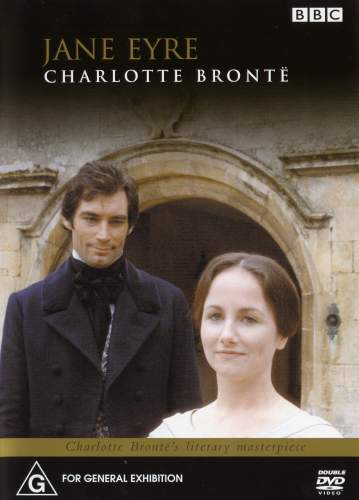
and the 2006 version starring Toby Stephens & Ruth Wilson. I never get tired of watching this one--it is so well-done!

And, if you're as big a fan as I am, you will probably be eager to see the newly released 2011 version! It looks good--a little dark and probably condensed to fit the typical 2-hour Hollywood length, but you really can't go too far wrong with Jane Eyre, can you?
(Also, J.E. fans will enjoy this interesting comparison between the many movie-version Mr. Rochester's.)
Thursday, April 21, 2011
Alice's Adventures in Wonderland & Through the Looking-Glass by Lewis Carroll

Carroll was a master at language and logic--he actually worked as a mathematics tutor at Oxford, and you can tell that he had a brilliant mind. He uses word play frequently in his stories, which makes them all the more amusing. Both books are very clever and entertaining and well-deserving of the title "classics."
Alice's Adventures in Wonderland has the stories of the Mad Hatter & March Hare and the Queen of Hearts. Through the Looking-Glass deals more with the chess pieces--the white and red queens--and traveling from one "square" of a giant chessboard to another. It includes the characters of Tweedle-dum and Tweedle-dee and the talking flowers.
 |
| Alice with Tweedle-Dum & Tweedle-Dee before their battle |
 |
| Alice talking with the White Queen |
Monday, April 11, 2011
Clarice Bean, the Utterly Complete Collection by Lauren Child


Jessica: Lydia talked me into reading these books, and it didn't take much effort, since our entire family is in love with Lauren Child's Charlie & Lola series. They were so entertaining!
Clarice Bean is a pre-teen girl growing up in England who deals with some very normal problems--a mean teacher, a pesky younger brother, and homework she doesn't want to do. The whole series reminded me of the Ramona books by Beverly Cleary, which I loved when I was little. These are for a slightly more mature audience than those, strictly for comprehension reasons. Any pre-teens would really enjoy them. They are clean, clever, and perfectly darling! I found myself wanting to talk like Clarice, who is the author of these "diaries." Listen to how delightful she is--for example, in describing the neighborhood organic grocery store:
It's all about selling things that haven't been sprayed with chemically things.
I am not sure what that word organic exactly stands for really. Who does know? They should call it "with bugs" or something so people know what they are in for. You might find a caterpillar in your broccoli but that's the point.
Mom says, "There's nothing wrong with eating a caterpillar."
I say, "There is if you are vegetarian."
On the irritating boy who sits behind her in class:
And I can hear Robert Granger breathing. That's what he does. He sits behind me and breathes. It drives me utterly crazy.
And I turn around and go, "Stop breathing, will you!"
And he says, "Clarice Bean, of course I cannot stop breathing because then I would be dead and how would you like that?"
I decide not to answer his question because Mom has taught me if you can't think of anything nice to say, then sometimes it is better to say nothing at all. You see, I am trying really hard to keep it zipped in class.
Describing tofu:
. . . .[It] looks a bit like a very palish cheese but tastes of nothing.
The diary-like feel ("epistolary" form--am I not so smart?) keeps you reading just a bit more to see what Clarice will talk about next. I don't know what to call it, but I love that she uses different font sizes and styles to emphasize words (reminds me of my wonderful sis-in-law, Chelsea, who does the same on her blog). It's such a cute way of writing!
Utterly Me, Clarice Bean is cute as can be, Clarice Bean Spells Trouble was my very favorite and had the best story line--very laughable throughout, and Clarice Bean, Don't Look Now was still great, although it dealt with more serious issues of divorce and moving, etc. They are such quick reads--I think I read each one in a day. I wish there were more of them!
Clarice Bean is a pre-teen girl growing up in England who deals with some very normal problems--a mean teacher, a pesky younger brother, and homework she doesn't want to do. The whole series reminded me of the Ramona books by Beverly Cleary, which I loved when I was little. These are for a slightly more mature audience than those, strictly for comprehension reasons. Any pre-teens would really enjoy them. They are clean, clever, and perfectly darling! I found myself wanting to talk like Clarice, who is the author of these "diaries." Listen to how delightful she is--for example, in describing the neighborhood organic grocery store:
It's all about selling things that haven't been sprayed with chemically things.
I am not sure what that word organic exactly stands for really. Who does know? They should call it "with bugs" or something so people know what they are in for. You might find a caterpillar in your broccoli but that's the point.
Mom says, "There's nothing wrong with eating a caterpillar."
I say, "There is if you are vegetarian."
On the irritating boy who sits behind her in class:
And I can hear Robert Granger breathing. That's what he does. He sits behind me and breathes. It drives me utterly crazy.
And I turn around and go, "Stop breathing, will you!"
And he says, "Clarice Bean, of course I cannot stop breathing because then I would be dead and how would you like that?"
I decide not to answer his question because Mom has taught me if you can't think of anything nice to say, then sometimes it is better to say nothing at all. You see, I am trying really hard to keep it zipped in class.
Describing tofu:
. . . .[It] looks a bit like a very palish cheese but tastes of nothing.
The diary-like feel ("epistolary" form--am I not so smart?) keeps you reading just a bit more to see what Clarice will talk about next. I don't know what to call it, but I love that she uses different font sizes and styles to emphasize words (reminds me of my wonderful sis-in-law, Chelsea, who does the same on her blog). It's such a cute way of writing!
Utterly Me, Clarice Bean is cute as can be, Clarice Bean Spells Trouble was my very favorite and had the best story line--very laughable throughout, and Clarice Bean, Don't Look Now was still great, although it dealt with more serious issues of divorce and moving, etc. They are such quick reads--I think I read each one in a day. I wish there were more of them!
Wednesday, March 30, 2011
Under the Greenwood Tree by Thomas Hardy

For one, the topic is much more perspicuous (yes, I found that using a thesaurus in an attempt to sound more intelligent and lofty . . .)--it is not as dark as Tess, nor as moralistic. This story takes place not twenty miles from the fictional setting of Tess in "Wessex," based on Dorset, England.
In the 1800's, church music was performed or accompanied by the choir, or "quire," consisting of male singers and instrumentalists. Under the Greenwood Tree is a love story between a young member of this choir and the local school teacher, an educated young lady who, unfortunately, also plays the organ, which is scheduled to replace the quire.
To be honest, not much happens in this story as far as action is concerned. The whole thing takes place in a few brief scenes scattered over the course of a year or so, and the love story itself is very subdued and ordinary. But Hardy's descriptions of people are reminiscent of Charles Dickens':
"Mr. Robert Penny, boot- and shoe-maker--a little man who, though rather round-shouldered, walked as if that fact had not come to his own knowledge, moving on . . . so that his lower waist-coat-buttons came first--and then the remainder of his figure."
In every scene, Hardy describes the characters' actions and expressions so succinctly--you can picture exactly how things would happen--like a movie in your mind. I think that is a rare quality in an author--you feel as if you're reading a screenplay.
So is this book for you? Well, if you have wanted to try Thomas Hardy, but have been frightened off by his weightier novels, then yes. Or if you're looking for a light-hearted piece of Victorian Literature. But if you want something very exciting--a real page-turner . . . perhaps not. You can pick up the movie instead--

Friday, February 18, 2011
Emma by Jane Austen

Before she began Emma, Jane Austen wrote, "I am going to take a heroine whom no one but myself will much like."
My husband completely agrees with that assessment of Emma Woodhouse--"She messes up everyone's life, but she still gets the guy in the end." Still, I have to admit that I like Emma--not that I would want her as a best friend (poor Harriet Smith!). I like that she has faults and weaknesses, but is determined to always make the best of things. And she is a regular homebody, much like myself.
I have often wondered why I love Jane Austen as much as I do. The plots of her novels are in no way thrilling, and there is, as Charlotte Bronte complained, "nothing vehement" in them. Still she has a way of showing the weaknesses and strengths of her characters--they are so real. Don't you know people like Mrs. Elton, always bragging and speaking of themselves? Or someone cute and clueless like Harriet Smith? And I'm not trying to brag, but I think I'm married to a definite Mr. Knightley (although Seth would cringe if I made that comparison out loud), who grounds me when I'm unreasonably upset or when I forget to think things through. Just as with Dickens' characters, by reading about them, we can discover similar traits (both good and bad) in ourselves.
I love how George Henry Lewes ("friend" of George Eliot) describes Jane Austen:
"First and foremost let Austen be named, the greatest artist that has ever written, using the term to signify the most perfect mastery over the means to her end. There are heights and depths in human nature Miss Austen has never scaled nor fathomed, there are worlds of passionate existence into which she has never set foot; but although this is obvious to every reader, it is equally obvious that she has risked no failures by attempting to delineate that which she has not seen. Her circle may be restricted, but it is complete. Her world is a perfect orb, and vital. Life, as it presents itself to an English gentlewoman peacefully yet actively engaged in her quiet village, is mirrored in her works with a purity and fidelity that must endow them with interest for all time."
I won't bore you with plot details--doubtless most of you are familiar with the story of Emma. If you choose to read it (and I strongly suggest you do!), I think you'll find it very entertaining. I love the way the characters develop, particularly Emma. By the end of the book you grow to--if not love her, at least to overlook her faults and to give her credit for trying hard to be good.
If you are too busy/lazy/unmotivated to read the book, then you must watch the movie. My two favorite versions:

 And much as I love that version, I might like this 2009 version slightly more . . . Romola Garai plays Emma, with Tommy Lee Miller as Mr. Knightley. It follows the book very closely, and the characters seem less perfect and polished, but more like real people. It's so good! I think it's about 4 hours, so be prepared with a lot of time and a good bowl of popcorn.
Subscribe to:
Posts (Atom)
LinkWithin
